
Why do two corrugated tube cutters seem the same, yet work so differently? For more than 8 years, I have been working in the flexible tube cutting equipment industry. I have seen bad selections in corrugated tube cutter suppliers generate expensive downtime and low production.
In this article, I will discuss how a corrugated tube cutter supplier manages quality. “Blade design, cutting speed and accuracy of length,” you’ll learn. I will also tell you what to look for before you purchase and why Vimfun is a trusted option.
What Is a Corrugated Tube Cutter and Why Does It Matter?
A corrugated tube cutter cuts flexible or stiff corrugated pipes to predetermined lengths neatly. These devices are utilised in cable protection, automotive, plumbing and industrial conduit systems. The ribbed surface must be handled without crushing using a plastic corrugated pipe cutting machine.
The blade has to find the proper spot between two ribs. A bad cut means rejected parts, lost material and delayed manufacturing. The correct corrugated tube cutter supplier will help you to safeguard the quality of your output and production speed concurrently.
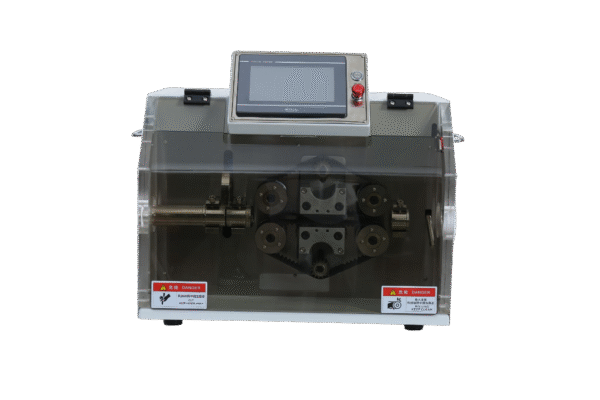
Standard vs. Industrial Tube Cutter: Key Specs at a Glance
| Feature | Standard Cutter | Industrial Tube Cutting Solution |
| Blade Type | Fixed rotary | Servo-driven precision blade |
| Cut Accuracy | ±2–3 mm | ±0.1–0.5 mm |
| Speed Range | 10–30 cuts/min | 60–300 cuts/min |
| Tube Diameter Range | 10–32 mm | 5–100 mm |
| Control System | Manual dial | PLC / HMI touch screen |
| Material Compatibility | Single type | Multi-material (PA, PP, PE, PVC) |
How Does Blade Design Control the Quality of Every Cut?
The blade is the most vital element of any precision tube cutting system. The corrugated rib is ripped by a weak blade, not cut neatly. It produces ragged edges that jam connections and cut wires. The best corrugated tube cutter suppliers employ blades with carbide tips or hardened steel.
These remain sharp even after millions of cuts. Blade angle, thickness and speed, all in concert. You’ve got to find the right rib hollow, every time. If you skip this step the blades will wear out quickly.
Blade Materials Used in High-Speed Corrugated Pipe Cutters
The blade material will determine the cut life and cost per cut. Here are the most popular types:
- Tool steel blades, hardened – inexpensive and durable, perfect for low to mid-volume production
- Carbide topped blades – up to 10x longer life, suitable for high speed corrugated pipe cutter usage
- Ceramic coated blades – less friction and heat on quick cycles
- Bi-metal blades – flexible backbone with firm cutting edge, utilised for thin-wall tubes flexible
Blade Replacement and Maintenance Schedule
| Blade Type | Avg. Cut Life | Replacement Signal | Downtime to Replace |
| Tool Steel | 500,000 cuts | Rough edge, burrs | 10–15 min |
| Carbide-Tipped | 5,000,000 cuts | Slight edge wear | 15–20 min |
| Ceramic-Coated | 3,000,000 cuts | Increased noise | 10 min |
| Bi-Metal | 1,000,000 cuts | Frayed cut surface | 10–15 min |
Key Blade Quality Checks a Supplier Must Perform
- Hardness testing on each batch of blades
- Edge sharpness test under optical microscope
- Blade balancing test to eliminate vibration at high RPM
- Ship your tube target material with a test cut
How Does Cutting Speed Affect Output and Accuracy?
Speed is more than how quickly the machine cuts. It’s about being precise at rapid speed. For a CNC tube cutting machine, you need to match the feed rate and strike of the blade and progress of the tube. Go too rapidly and the blade will strike the incorrect place.
Too sluggish, it blocks your queue. Top corrugated tube cutter suppliers employ servo motors with encoder feedback. This keeps the cut position stable at 200+ cuts per minute. A true high-speed corrugated pipe cutter can do that.
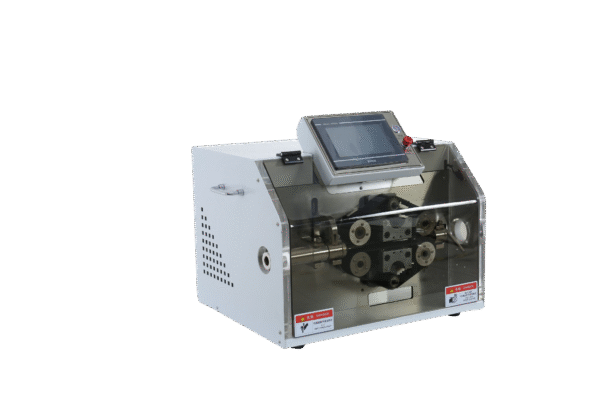
Speed Benchmarks by Application
Low-volume / prototyping: 10–40 cuts per minute – manual or semi-auto setup
Mid-volume production: 40–120 cuts per minute – automatic corrugated tube cutter with basic PLC control
High-volume industrial: 120–300 cuts per minute – full CNC tube cutting machine with servo axis and real-time error correction
Advantages of High-Speed Servo-Driven Systems
- Consistent cut location at all speeds
- Auto re-sync if the tube slips or the feed varies
- Programmable deceleration near the cut point for cleaner edges
- Energy-efficient motor control decreases heat build-up
Disadvantages of Low-Cost High-Speed Machines
- Mechanical inertia, cut drift at maximum velocity
- There are no feedback loop faults over time
- Blade wear develops when impact force is not regulated
- Tube shape deformation at non-servo controlled clamp pressure
How Do Suppliers Guarantee Accurate Cut Length Every Time?
Many corrugated tube cutter suppliers lose business on length accuracy. Assembly is impossible if the cut is 2 mm too short. Precision tube cutting systems employ encoder wheels or servo driven pull rollers to measure the length of the tube in real time.
The timing of the cut couldn’t be better. Better machines auto compensate, if the tube slides, the mechanism auto corrects. This is especially important for flexible tube cutting equipment. Always ask for genuine production data, not just specs.
Length Accuracy by Machine Type
| Machine Type | Length Tolerance | Sensor Type | Best For |
| Manual Cutter | ±3–5 mm | None | Samples, repairs |
| Semi-Automatic | ±1–2 mm | Mechanical counter | Low-volume |
| Servo-Driven Auto | ±0.3–0.5 mm | Encoder + PLC | Production lines |
| CNC Precision | ±0.1 mm | Optical encoder + AI correction | High-spec OEM |
Case Studies: Length Accuracy in Real Sectors
| Sector | Tube Type | Required Tolerance | Machine Used | Result |
| Automotive wiring | PA corrugated | ±0.3 mm | CNC tube cutting machine | Zero rework rate |
| Solar panel conduit | PE flexible | ±0.5 mm | Servo-auto cutter | 18% waste reduction |
| HVAC ducting | PP ribbed pipe | ±1 mm | Semi-auto with encoder | On-spec output |
| Railway cable tray | PVC corrugated | ±0.2 mm | Full CNC precision system | 100% pass rate |
What Should You Expect From a Corrugated Tube Cutter Supplier Beyond the Machine?
The main characteristics are blade, speed and length. But a real corrugated tube cutter supplier of industrial tube cutting solutions also fulfils larger quality criteria. ISO 9001 certification and CE marking are important. Suppliers should perform factory acceptance tests before the shipment of each equipment.
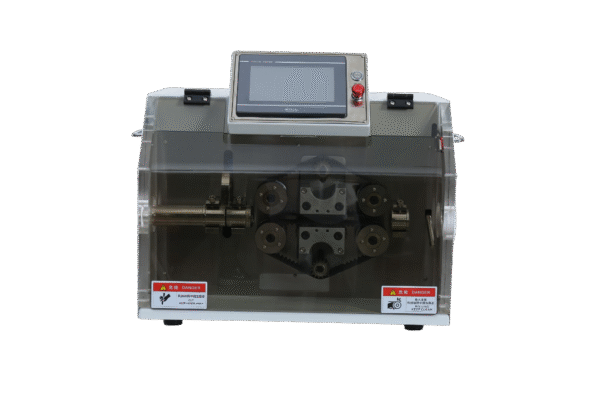
After sales assistance is also important. You require training, off-site support and replacement components. A provider that will not support the equipment after delivery is a risk. Always get sample cuttings of the precise kind of tube before purchasing.
Supplier Quality Checklist
- ISO 9001 certified production facility
- CE / UL / RoHS compliance for your target market
- Factory Acceptance Test (FAT) prior to shipping
- Sample cut report for your particular tube and length requirements
- Stock of spare parts guaranteed for minimum 3 years
- We may help you remotely or come to you on site.
- Warranty conditions are clear – minimum 12 months on body of machine
Frequently Asked Questions
What makes a corrugated tube cutter supplier reliable?
You get constant blade quality and correct cut lengths from a trusted corrugated tube cutter supplier. They also provide good after purchase assistance. They share actual production statistics. They do test cuts before you purchase. They support the machine with a well-defined warranty and replacement parts program.
- They are ISO 9001 certified for quality management
- They provide you sample cut reports from your real tube material
- They provide remote diagnostics and local service staff.
How do I choose the right automatic corrugated tube cutter for my line?
First, understand your tube diameter range, material type and desired cut length tolerance. Also know your daily output goal. Then match them to the machine’s blade type, feed system and control settings. “A good supplier will guide you using your real data.”
- Before you contact a provider, identify your tube OD range and wall thickness
- Request speed vs. accuracy data at your particular output rate
- Determine whether the machine will run more than one tube type or only one
What is the typical cut tolerance for a precision tube cutting system?
Most tube cutting equipment for precision work are servo-driven with optical encoders and can attain an accuracy of ±0.1 mm to ±0.5 mm. Basic devices with mechanical counters come in ±1 to ±3 mm. For automotive or OEM work, strive for ±0.3mm or better to prevent rework expenditures.
- Servo and encoder systems make the most precise cutting
- Always check tolerance from genuine production testing, not datasheets
- Tube elasticity may affect tolerance – check under real run circumstances
Can a high-speed corrugated pipe cutter handle flexible tubes without damage?
Yes, but only if the clamping mechanism is designed for flexible material. Rigid clamp compresses flexible tubes and spoils the cut. Look for providers who have pneumatic or servo-controlled soft-grip clamps. These clamps are self-adjusting to the tube diameter and it protects the tube form.
- Soft grip pneumatic clamps are suitable for flexible materials
- Flexible tube types Avoid equipment with fixed single jaw clamp
- Make sure that the machine speed is not higher than the tube’s recovery speed
Conclusion
The correct source is the beginning of quality tube cutting. All blade design, speed, and length precision must function together. Your whole manufacturing line might be stalled by one weak link. The top corrugated tube cutter suppliers do all three well and help you after the sale.
Vimfun does just that. Need a CNC tube cutting machine or high-speed corrugated pipe cutter? Vimfun has the correct answer. Stop by Vimfun now and obtain a free sample cut test.