
Why do two comparable automatic conduit cutter machines offer such varying outcomes on the cut? I have approximately 12 years experience in wire harness processing equipment and tube-cutting sectors. The solution is obvious, is the blade.
In this article I will explain what is automatic conduit cutter machine. I’ll talk about the three basic blade kinds. I’ll help you choose the appropriate one. And I’ll show you genuine field instances.
What Is an Automatic Conduit Cutter Machine?
An automatic conduit cutter machine cuts tubes and sleeves to a preset length without any operator intervention. It is suitable for automobile cable protection sleeves, corrugated protective sleeve cutting, PVC tube processing equipment. The cut is achieved using a servo motor rotary cutting device.
It is controlled by PLC touch screen control machine. It is able to process PVC, PE, nylon and soft plastic tubes. Automatic feeding and cutting system to eliminate mistakes and save time. A high precision tube cutter may make thousands of cuts every shift. The blade governs all cut quality and tool life.
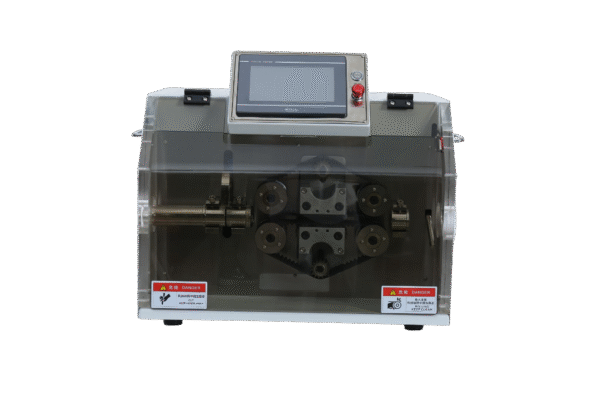
Core Features of an Automatic Conduit Cutter Machine
| Feature | Details |
| Machine Type | Automatic Conduit Cutter Machine |
| Control System | PLC Touchscreen, Servo Motor |
| Cutting Method | Rotary / Blade / Saw Type |
| Common Materials | PVC, PE, Nylon, Corrugated Sleeve |
| Key Benefit | High Precision, Automated Feeding |
| Industry Use | Automotive, Wire Harness, Industrial |
| Blade Options | Carbide Tip, HSS, Saw Type |
Which Blade Type Gives the Cleanest Cut on PVC and PE Tubes?
Wrong blade = ragged edges, wasted material. Blades are key when it comes to cutting solutions for PE pipe and PVC tube processing equipment. A carbide tip blade cuts strong polymers extremely neatly.
An HSS blade works well with soft, flexible tubing. A saw style blade is suitable for corrugated and ribbed surfaces. Every blade has its duty. The appropriate choice relies on your material, speed and quality requirements.
Carbide Tip Blade – Best for Hard Plastics and Long Runs
A Tungsten Carbide Tip Blade has a Tungsten Carbide edge. It’s very tough. It holds its edge for a long period. “Works even at high speeds.”
- Ideal for Rigid PVC, Nylon and Hard Conduit Tube
- Keeps sharp up to 5x longer than steel blades
- Clean cut without burrs
- Ideal for large volume industrial automation solutions
- Suitable for accurate precision length control systems
Blade Type Quick Comparison
| Blade Feature | Carbide Tip | HSS Blade | Saw Type |
| Material Hardness | Very High | Medium | High |
| Lifespan | Long | Medium | Medium |
| Cut Smoothness | Excellent | Good | Fair |
| Best For | Rigid PVC, Nylon | Soft Tube, Flexible | Corrugated Sleeve |
HSS Blade – Reliable Choice for Flexible and Soft Tubes
HSS is High Speed Steel. These blades are cheaper than carbide. They are simple to replace and sharpen.
- For flexible sleeves of PVC, polyethylene and rubber
- Easy to find/replace
- Medium / Low speed operation
- A nice option for tiny wire harness processing equipment operations
Saw Type Blade – The Right Pick for Corrugated Sleeves
The saw blade features tiny teeth along its edge. These teeth grab ribbed surfaces. They cut cleanly and smoothly.
- For cutting of corrugated protective hose
- Good for rough outside surfaces
- Reduces ripping and uneven cuts
- Automotive cable protection sleeve best jobs on corrugated conduit
How Does Blade Material Affect Machine Performance and Tool Life?
Does the blade material really affect the life of your machine? Yes – and more than most people realise. Blade material influences heat transmission, vibration and wear rate. It will also modify the frequency at which you replace blades. A busy plastic tube cutting machine may operate 8 to 16 hours a day.
Then blade life is very much a factor in your cost and output. Carbide is more expensive to buy. But it lasts longer and it cuts better. HSS costs cheaper but wears out quicker. The appropriate blade selection will keep your high-precision tube cutter working smoothly.
Blade Wear and Production Cost
- Carbide tip blades wear slowly and reduce replacement cost
- HSS Blades fade quickly on hard tubes yet are affordable
- Saw blades require teeth inspections after extensive cycles of corrugating
- Regular inspections reduce downtime on any industrial automation solution
Blade Type vs. Industry Sector
| Sector | Recommended Blade | Reason |
| Automotive Wire Harness | Carbide Tip | High volume, rigid conduit |
| Home Appliance Wiring | HSS Blade | Soft flexible tubes |
| Construction Conduit | Saw Type | Corrugated pipes, thick walls |
| Electronics Assembly | Carbide Tip | Fine tubes, clean cut needed |
Carbide tips last the longest and cut the cleanest, but they cost more. HSS is cheap, but wears out quickly. The only true possibility for corrugated materials is a saw kind. Carbide tips are the ideal long-term solution for most users of automotive cable protection sleeve and PVC tube processing equipment.
Advantages of Carbide Tip:
- Long lifespan
- Clean cut edge
- Less downtime
Disadvantages of Carbide Tip:
- Higher upfront cost
- Not ideal for very soft materials
Advantages of HSS Blade:
- Low cost
- Easy to replace
Disadvantages of HSS Blade:
- Shorter lifespan
- Needs more frequent changes
What Are Real-World Results When Using the Right Blade on a Conduit Cutter?
The real-world outcomes reveal the difference. This blade is used in manufacturing to obtain less rejections and quicker cuts. They also reduce their price each item. The servo motor rotary cutting mechanism is accurate to within ±0.1mm with the proper blade.
The PLC Touchscreen control machine is simple establishing with rapid. Here are four true examples when the blade made a major impact.
Case Studies: Blade Performance in Real Factories
| Case | Industry | Blade Used | Result |
| Case 1 | Automotive OEM | Carbide Tip | 40% fewer rejects, 3x blade life vs HSS |
| Case 2 | Home Appliance Plant | HSS Blade | Lower cost per cut on soft PVC sleeves |
| Case 3 | Construction Supplier | Saw Type | Zero tearing on corrugated conduit runs |
| Case 4 | Electronics Factory | Carbide Tip | ±0.1mm length accuracy on micro tubes |
In every situation it is shown. The correct blade yields greater outcomes. This is the quickest approach to increase the output of your precise length control system.
Key Takeaways from Case Studies
- Carbide Blades Slice Scrap on Fast Auto Lines
- HSS blades reduce costs for soft material tasks
- Saw blades solve corrugated sleeve issue
- The finest automatic feeding and cutting systems use the proper blade
Why Vimfun Machines Use Optimized Blade Systems
All the three blade types have their own automated conduit cutting machines made by Vimfun. They have a PLC touchscreen control and a servo motor rotary cutting system on their equipment. Operators may swap blade modes without having to change up the complete rig.
Vimfun’s PE pipe cutting solution and plastic tube cutting system models are tested on smooth and corrugated tubes. With Vimfun, you get a machine that is adaptable, sturdy and accurate.
How Do You Maintain Blades to Keep Your Cutter Running Longer?
It’s easy to maintain a blade. But many factories do without. A few basic actions will maintain your high precision tube cutter in good condition everyday.
- Daily check blades for chipping and dull places
- Blades should be cleaned after each shift – remove dust and plastic residue
- Use proper speed – Manual has RPM values per type of blade.
- Replace on time – do not wait for quality of cut to degrade
- Store blades carefully – keep dry & apart from other metal tools
- Check the alignment often—a misaligned blade will wear unevenly and cut badly
Good upkeep increases blade life. It also helps to ease the tension on your automated feeding & cutting system.
FAQs
What blade type is best for an automatic conduit cutter machine cutting PVC tubes?
The ideal blade for stiff PVC tubing is the carbide tip. It is sharp and has a crisp edge. HSS is good for soft PVC at lower cutting rates. Always fit the blade to your kind of tubing and wall thickness.
- Carbide tip for rigid PVC
- HSS for soft or flexible PVC
- Check the wall thickness before selecting
Can one machine use all three blade types?
Yes. Most current automatic conduit cutting machinery will accept all three blades. With the Vimfun machines you may set the blade holder and speed using PLC touchscreen control machine. It enables a single machine to do several tasks.
- The blade holder should fit snug
- Blade type varies speed settings
- Check Your Machine Specs Before Making the Switch
Is a saw-type blade good for automotive cable protection sleeves?
Yes. The saw blade is the finest option for cutting automobile wire protection sleeve and corrugated protective sleeve. Its teeth sink into the ribbed surface and cut clean. Straight blades compress and slide the ribs. That creates bad edges, that fails quality inspections.
- Teeth hold well on corrugations
- No smashing or shredding
- Typical automobile wire harness lines
What happens if I use the wrong blade on my conduit cutter machine?
The improper blade will leave rough edges and wear quicker. It also generates machine vibration and more rejected parts. It also highlights the servo motor rotary cutting mechanism . Always use the blade for the tube material you are working with. Your plastic tube cutting system will perform considerably better.
- Wrong blade indicates poor cut quality
- More vibration and wear on machine
- Higher cost/cut and more rejections
Why should I choose Vimfun for my automatic conduit cutter machine?
Vimfun produces precision engineered automatic conduit cutter machines. PLC touchscreen control and servo motor systems are standard. Their devices are compatible with all blade kinds. They are used for corrugated protective sleeve cutting, PE pipe cutting solutions, and wire harness processing equipment. Vimfun also provides comprehensive technical support and after-sales service. They are a reliable partner for manufacturers of all sizes.
- Supported carbide, HSS & saw blade
- PLC touchscreen & servo motor included
- Trusted by automotive and industrial customers globally
Conclusion
On hard tubes use a carbide tip. HSS for soft materials. For fluted sleeves use saw type. Less rejections, reduced costs, the perfect blade. The first step to greater success is always blade choice. Vimfun is an all-in-one machine for all kinds of blades.
Vimfun automatic conduit cutter machines are durable and accurate. They meet all the needs from cutting of vehicle cable protection sleeve to wire harness processing equipment lines. Get in touch with Vimfun now.