
Why do handcut conduit tubes usually seem so rough and uneven? I’ve been in the cable protection industry for almost 7 years. I see this problem hurting production lines on a daily basis. This article will describe how a cable conduit cutting machine works.
I’ll discuss the blade, clamp and feed system. I’ll talk about the different machine types, key features, real examples, and how to choose the right machine for you.
What Is a Cable Conduit Cutting Machine and How Does It Work?
A cable conduit cutting machine is an industrial instrument that cuts conduit tubes quickly and to a high precision. It cuts flexible or corrugated conduit to predetermined lengths – automatically and without human error. Simple: the tube goes in, a clamp grabs it, and a blade cuts it clean.
One well-liked model is a corrugated conduit cutting machine. These devices are utilized in wire harness, telecom, and electrical sectors to save time and reduce waste.
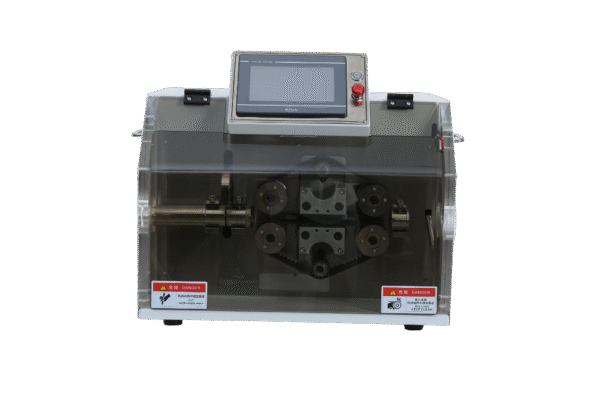
Manual Cutting vs. Machine Cutting – Which Wins?
| Feature | Manual Cutting | Cable Conduit Cutting Machine |
| Cut Accuracy | Low | High (±0.1 mm) |
| Speed | Slow | 200–800 cuts/hour |
| Labor Required | High | Minimal |
| Material Waste | High | Very Low |
| Tube Damage Risk | Medium–High | Very Low |
| Best For | Small jobs | Industrial production |
How Does the Blade System Cut Conduit Without Damage?
The most crucial element of a flexible conduit cutting machine is the blade. Bad blades create crushed tubes and ragged edges. The blade must be sharp, aligned, and fitted to the tube material. Most machines employ a rotary blade that rotates at a high speed and cuts in one smooth pass.
Automatic corrugated tube cutters are sophisticated and feature a multi-blade head that cuts from all sides at once. Blade speed and pressure may be changed for various kinds of tubes.
What Blade Types Are Used in Conduit Cutters?
Different blades perform well with different tubes. The appropriate blade selection protects the machine and the product.
- Rotary Circular Blade – for use with flexible and corrugated plastic conduit
- Straight guillotine blade – for soft or thin-walled tubes
- Multi-blade Rotating Head – suitable for corrugated sleeves with clean cut of the groove
- Tungsten Carbide Blade – for stiff or semi-rigid nylon conduit
Blade Performance Comparison
| Blade Type | Best Material | Cut Speed | Edge Quality | Durability |
| Rotary Circular | Flexible PVC, PE | Fast | Very Clean | Medium |
| Guillotine | Soft Plastic | Medium | Clean | High |
| Multi-blade Head | Corrugated Nylon | Fast | Excellent | High |
| Tungsten Carbide | Hard Nylon, PA | Slow–Medium | Very Clean | Very High |
Key Blade Maintenance Points
- Replace or sharpen blades after 50,000 to 100,000 cuts
- Clean the blade after each cycle of manufacturing
- Check blade alignment weekly
- Use right blade type for each tube material
How Does the Clamp and Feed System Control Cut Accuracy?
The clamp-and-feed mechanism is responsible for the precision of a Wire Harness Tube Cutting Machine. Without a strong clamp the tube moves, and the cut is improper. Before each cut, the feed mechanism advances the tube by a specific length.
The clamp holds the tube at the groove in the Corrugated Sleeve Cutting Machine to preserve the walls. Feed speed is controlled by servo motors. The user just sets the length and the count – the machine does the rest.
Pneumatic Clamp vs. Servo-Driven Feed – Which Is Better?
Pneumatic Clamp System:
- Air pressure holds the tube in place
- Releases and clamps extremely rapidly
- Works nicely for round & corrugated tubes
- Easy to care for
Servo-Driven Feed System:
- Uses electric motors to push the tube out .
- Very precise length control (±0.1 mm)
- Runs quickly without compromising accuracy
- Can be modified to fit various tube diameters
Clamp and Feed Method Advantages and Disadvantages
| Method | Advantage | Disadvantage |
| Pneumatic Clamp | Fast, simple, low cost | Needs an air compressor |
| Servo Feed | High accuracy, programmable | Higher upfront cost |
| Roller Feed + Clamp | Good for long tubes | Rollers need regular checks |
| Auto-grip Clamp | Fits many tube sizes | A bit slower |
The optimal combination is a servo feeder with a pneumatic clamp. It is fast and accurate. It also reduces tube damage. This is just what a busy industrial tube cutting equipment line needs.
What Industries Use a Cable Conduit Cutting Machine the Most?
Cable protection tube cutters are not only for vehicles or wire harness work. They are utilised in various industries. Fast and accurate cuts are a must for any firm that employs conduit or flexible tubing. The automotive industry is the biggest user, performing millions of cuts annually.
These are also used in the telecom, construction, medical and appliance sectors. It is too sluggish and imprecise to cut by hand. What takes a human minutes, a machine performs in seconds and does it better.
Industry Use Cases for Cable Conduit Cutting Machines
| Industry | Machine Type Used | Tube Material | Key Benefit |
| Automotive Wire Harness | Automatic Corrugated Tube Cutter | PA Corrugated Nylon | Fast, clean cuts for wire bundles |
| Telecom Cable Protection | Flexible Conduit Cutting Machine | PE Flexible Conduit | Exact lengths for cable runs |
| Home Appliance Manufacturing | Corrugated Sleeve Cutting Machine | PVC Corrugated Sleeve | Less waste, lower labor cost |
| Medical Device Assembly | Industrial Tube Cutting Equipment | Soft PVC, Silicone | Clean and precise cuts |
Top Sectors and Their Machine Priorities
Automotive Sector:
- Requires high speed 600+ cuts per hour
- Must cut at specific groove positions on corrugated piping
- Must deal with numerous tube diameters with no lengthy delays
Construction and Electrical Sector:
- Longer cut lengths needed – up to 2–3 meters
- Needs heavy clamp for thick wall conduit
- Frequently utilises semi-automatic machinery for tiny sites
What Extra Features Make a Conduit Cutter More Efficient?
The latest cable conduit cutting machines include intelligent features that decrease the time and effort required by the operator. You may preset the cut duration in seconds on a touch-screen panel. When the job is over the machine stops counting by itself.
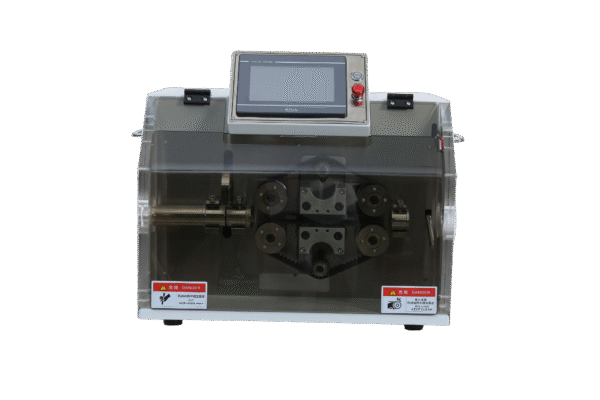
Some types offer auto tube loading, which means no hand feeding is necessary. Dust ports keep area clean. The safety guards safeguard the operator. Vimfun top models offer multi-length programming, cut up to 9 lengths in one task without interrupting.
Key Features to Look For in a Conduit Cutting Machine
- Touch-Screen PLC Control – simple to use, stores your settings
- Auto Length Adjustment – motor adjusts feed tool-free
- Multi-Length Programming – up to 9 lengths per project
- Blade Safety Cover – machine stops if cover is opened
- Production Counter – parts cut per shift
- Low Noise Motor – less than 70 dB for a better working area
Frequently Asked Questions
What is a cable conduit cutting machine used for?
Conduit tubes are cut to exact lengths by a cable conduit cutting machine. Used for cable protection, wire harness work and electrical work. It substitutes sluggish hand cutting with rapid, precise cutting by machines.
- Compatible with PVC, PE, PA, nylon tubes
- Cuts from 5 mm to 3,000 mm in length
- Used in car, telecom, construction and medical industries
Can a flexible conduit cutting machine handle different tube sizes?
Yes. Most flexible conduit cutting machines come with adjustable heads and rollers. They accommodate tube diameters ranging from 6 mm to 60 mm. Changing the size setting is just a matter of minutes.
- Adjustable clamp fits several sizes of tubing
- Servo feed auto adjustment based on size setting
- One machine will take care of most of your tube sizes
What materials can a wire harness tube cutting machine cut?
Wire harness tube cutting machine for cutting PVC, PE, PP, PA, nylon, silicone tube. It processes most materials utilised in the cable protection job.
- Carbide blades for strong nylon and PA pipes
- Rotary blades perform well on PVC and PE
- Always match the blade to the hardness of the material
How do I choose the right industrial tube cutting equipment for my factory?
Consider your tube type, cut length range, daily production, and budget. Have four things guide your choice.
- For large volume lines consider a full auto servo model
- Semi-automatic models save money for small businesses
- Be sure the blade is appropriate for your tube material
Conclusion
A cable conduit cutting machine is a useful tool for any industry. It is time-saving. It creates less trash. It always produces the same wonderful outcome. They function together. Blade, clamp, and feed. They make each cut swift and clean.
If you deal with conduit or cables this machine will help you a lot. Want a good one ? Go to Vimfun. They provide high grade corrugated sleeve cutting equipment and automated corrugated tube cutters.