
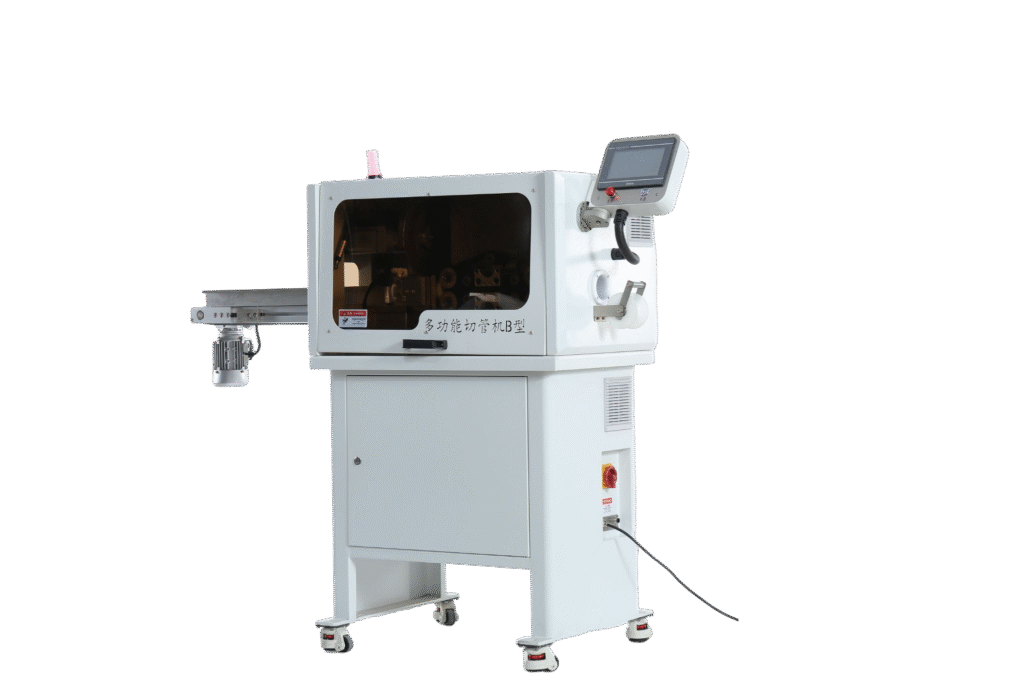
n modern manufacturing industries, cable processing plays a critical role in ensuring efficient power distribution and signal transmission. One of the most essential tools in this process is the automatic wire stripping machine. Unlike manual tools, these machines are designed to provide consistent accuracy, reduce labor costs, and handle large-scale production with ease. As industries move toward automation, the adoption of automatic wire stripping machines has become a key factor in enhancing productivity and quality.
Precision and Consistency in Cable Processing
Manual stripping tools often result in uneven cuts, damaged conductors, or inconsistent lengths. An automatic wire stripping machine, however, guarantees uniform results across thousands of wires. With programmable settings, manufacturers can strip different cable types, diameters, and insulation thicknesses without manual adjustment. This ensures repeatability and minimizes the risk of defects in cable harness assemblies.
Labor Efficiency and Cost Savings
Traditional manual stripping requires skilled workers, which increases labor costs and production time. By contrast, automatic wire stripping machines can process hundreds or even thousands of wires per hour, significantly reducing the need for manual labor. The machine’s automation not only speeds up production but also frees up workers to focus on higher-value tasks, optimizing overall factory efficiency.
Industrial Applications
Automatic wire stripping machines are widely used in industries such as automotive, electronics, aerospace, and household appliances. In automotive wiring harness production, for instance, consistent quality and precision are vital for safety and performance. Similarly, in electronics manufacturing, these machines enable efficient processing of high-density cables for devices like computers, smartphones, and medical instruments.
Comparison with Traditional Methods
When compared with manual stripping tools, automatic wire stripping machines provide significant advantages. Manual tools are suitable only for small-scale or occasional work, while automatic machines are designed for continuous industrial use. The reduction in error rates and the improvement in processing speed make automatic solutions the preferred choice for modern factories seeking both quality and efficiency.

Conclusion
The automatic wire stripping machine represents a vital step toward industrial automation, delivering accuracy, speed, and reliability in cable processing. By reducing labor costs and minimizing errors, it helps manufacturers meet increasing production demands while ensuring consistent product quality.