Introduction
Thailand is rapidly becoming a hub for new energy vehicles (NEVs), with investments from companies like BYD and Great Wall Motor fueling EV production in industrial hubs like Chonburi and Rayong. High-voltage wire harnesses, critical for EV batteries and motors, require precision and scalability that manual processes cannot deliver. Automated harness processing Thailand streamlines production, ensuring quality and efficiency for Thailand’s NEV manufacturers. This article explores how automated harness processing Thailand powers the country’s growing NEV sector in 2025.
Thailand’s NEV Boom and Harness Production Needs
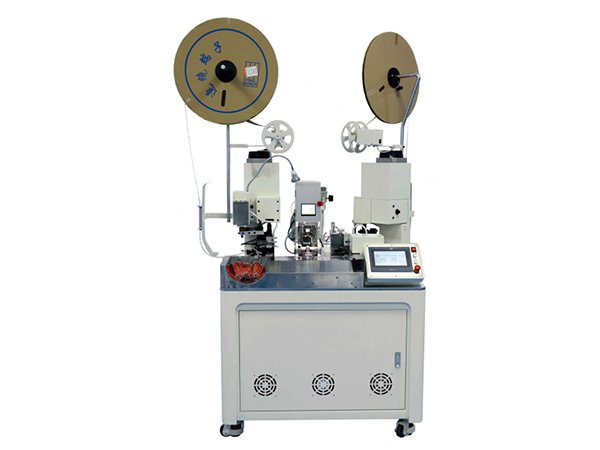
Thailand aims to produce 30% of its vehicles as EVs by 2030, supported by government incentives and foreign investments in the Eastern Economic Corridor (EEC). High-voltage wire harnesses (10–50 mm²) are essential for EV batteries, motors, and charging systems, presenting challenges such as:
- Precision Requirements: Exact cutting and crimping for high-current reliability.
- High-Volume Demand: Rapid output to meet global EV market growth.
- Quality Standards: Compliance with ISO 26262 and IATF 16949 for safety and reliability.
- Cost Pressures: Rising labor costs in Thailand demand efficient solutions.
Automated harness processing Thailand addresses these needs, enabling manufacturers to meet NEV production goals.
Benefits of Automated Harness Processing Thailand for NEVs
Implementing automated harness processing Thailand offers tailored advantages for NEV manufacturers:
1. Precision for High-Voltage Harnesses
- Why It Matters: EV systems require reliable connections to handle high currents safely.
- Benefit: Servo-driven machines deliver ±0.1 mm accuracy for cutting and stripping large-gauge wires.
- Example: A Chonburi plant improved harness reliability by 30% with automated processing.
2. Scalable Production
- Why It Matters: Thailand’s NEV targets demand high output to compete globally.
- Benefit: Machines process 2,000–4,000 harnesses per hour, boosting capacity by 25%.
- Example: A Rayong facility doubled output to meet BYD’s production schedule.
3. Cost Reduction
- Why It Matters: Competitive pricing is critical in Thailand’s growing NEV market.
- Benefit: Automation cuts labor costs by 50% and reduces material waste by 20%.
- Example: A Bangkok plant saved 35% on production costs with automated systems.
4. Safety and Compliance
- Why It Matters: NEV harnesses must meet stringent safety standards for global markets.
- Benefit: Integrated testing ensures compliance with ISO 26262 and IATF 16949.
- Example: A supplier achieved zero-defect production for EV battery harnesses.
Key Features of Automated Harness Processing Thailand
To meet NEV requirements, choose machines with these features:
- Heavy-Duty Processing: Supports large-gauge wires (10–50 mm²) for high-voltage harnesses.
- High-Precision Cutting: Rotary blades and servo systems for ±0.1 mm accuracy.
- Robust Crimping: High-force crimping with monitoring for secure connections.
- Automated Testing: Continuity and insulation checks for safety compliance.
- Local Support: Service teams in Bangkok and Chonburi for rapid maintenance.
Our automated harness processing Thailand solutions are designed for the NEV sector, with 24/7 support in Thailand.
Case Study: Chonburi NEV Plant Success
A Chonburi-based NEV manufacturer struggled to produce high-voltage wire harnesses for EV batteries. Manual processes led to inconsistent crimping and a 10% defect rate, delaying deliveries to a major client.
Solution: The plant adopted our automated harness processing Thailand system, featuring:
- High-precision cutting for 25 mm² wires
- Automated crimping with force monitoring
- Integrated insulation testing for ISO 26262 compliance
Results:
- 25% increase in production efficiency
- 20% reduction in defect rates
- 40% labor cost savings
- Secured a contract with a global NEV brand
This success highlights how automation drives Thailand’s NEV growth.
Choosing the Right Supplier
Selecting a supplier for automated harness processing Thailand is critical. Look for:
- NEV Expertise: Experience with high-voltage harnesses for EVs.
- Local Presence: Support teams in Thailand for training and maintenance.
- Customization: Machines tailored to NEV wire types and production goals.
- After-Sales Service: 24/7 support and spare parts availability in Bangkok and Chonburi.
Our company offers industry-leading machines with local teams in Thailand, ensuring seamless integration and minimal downtime.

Getting Started with NEV Automation
Follow these steps to implement automated harness processing Thailand:
- Assess Needs: Identify wire gauges, production volume, and compliance requirements.
- Test Equipment: Request a demo to evaluate precision and throughput.
- Partner with Experts: Choose a supplier with NEV expertise and local support.
- Plan for Scale: Invest in modular systems to grow with Thailand’s NEV market.
For a comprehensive overview, read our Complete Guide to Wire Harness Automation for Southeast Asia and Mexico in 2025.
Conclusion
Thailand’s NEV sector demands precision, scalability, and cost efficiency to meet global EV goals. Automated harness processing Thailand enables manufacturers to produce high-voltage harnesses with reliability and speed. By choosing the right automation solutions and supplier, you can power Thailand’s EV revolution in 2025.